
Introduction: The Beating, Syncopated Heart of America’s Greatest Art Form
While jazz was born in the bustling melting pot of New Orleans, it matured, revolutionized, and achieved its supreme artistic virtuosity on the island of Manhattan. For more than a century, New York City has served as the undisputed global capital of jazz. It was in the smoky, late-night basement clubs of Harlem and Greenwich Village that the great innovators of modern music created history: Duke Ellington redefined orchestral composition at the Cotton Club; Charlie ‘Bird’ Parker and Dizzy Gillespie invented bebop during lightning-fast after-hours jam sessions at Minton’s Playhouse; Thelonious Monk struck angular, dissonant chords on upright pianos; and John Coltrane and Miles Davis blew modal masterpieces into legend.
Today, New York remains the ultimate pilgrimage for music connoisseurs. On any given evening across the five boroughs, hundreds of the world’s finest acoustic bassists, saxophonists, trumpet virtuosos, and pianists take to the bandstands—from intimate subterranean basement clubs where patrons sit elbow-to-elbow in reverent silence, to glamorous Lincoln Center concert halls overlooking Columbus Circle. Yet navigating Manhattan’s live jazz scene can present serious logistical challenges for visiting music lovers. Shows operate on strict, non-negotiable set times (typically 7:30 PM, 9:30 PM, and 11:30 PM); popular venues enforce table minimums and reservation rules; and moving between scattered clubs in Harlem, Midtown, and the Village late at night can be disorienting. A dedicated private luxury chauffeur from Tour to NYC Tours transforms your musical pilgrimage: greeting you curbside between sets, providing a quiet leather-appointed sanctuary, and ensuring a safe, designated driver is always waiting curbside as the clock strikes 2:00 AM.
In this curated musical master guide, we explore the sacred history of the Harlem Renaissance, map Manhattan’s legendary historic jazz temples, highlight modern hidden listening rooms, provide etiquette and reservation advice, and explain how a private chauffeured jazz safari unlocks the syncopated soul of New York.
The Birthplace of Modern Jazz: Harlem & The Jazz Age
1. The Harlem Renaissance & The Cotton Club Era
During the 1920s and 1930s, the northern Manhattan neighborhood of Harlem was the vibrant cultural capital of Black intellectual, artistic, and musical genius. It was here that the Harlem Renaissance flourished, led by poets like Langston Hughes and musical innovators like Fletcher Henderson. At the legendary Cotton Club (originally located at 142nd Street and Lenox Avenue), a young bandleader named Duke Ellington secured a nightly radio broadcast wire that transmitted his sophisticated, swinging ‘jungle music’ into living rooms across America, making him an international household name.
2. Minton’s Playhouse (206 West 118th Street): The Birth of Bebop
Founded in 1938 by tenor saxophonist Henry Minton on the first floor of the Hotel Cecil, Minton’s Playhouse holds an immortal place in American cultural history as the physical incubator of bebop. In the early 1940s, young revolutionary musicians—tired of playing rigid, predictable commercial swing arrangements for white dance bands—gathered at Minton’s for informal, late-night jam sessions that lasted until dawn. Here, pianist Thelonious Monk, drummer Kenny Clarke, guitarist Charlie Christian, trumpet virtuoso Dizzy Gillespie, and alto saxophonist Charlie Parker invented a radical new musical language: lightning-fast tempos, complex altered chord substitutions, and asymmetric improvisations that elevated jazz from commercial dance music into high modern art.
3. The Apollo Theater (253 West 125th Street)
Opening its doors to Black performers and audiences in 1934, the historic Apollo Theater is the undisputed cathedral of African-American performance arts. It was on the Apollo’s stage that a nervous, seventeen-year-old homeless girl named Ella Fitzgerald won Amateur Night in 1934, launching her legendary vocal career. Billie Holiday, Sarah Vaughan, James Brown, Aretha Franklin, and Stevie Wonder all electrified audiences beneath the Apollo’s grand proscenium arch.
Historic Downtown Temples: Greenwich Village & Flatiron
1. Village Vanguard (178 Seventh Avenue South, West Village)
Operating continuously since 1935, the Village Vanguard is universally revered as the most sacred, historically significant jazz club on the planet. Descend the steep, narrow wooden stairs beneath the iconic red-and-white striped neon awning into an intimate, wedge-shaped subterranean basement that has hosted every giant in jazz history. The acoustic properties of the diamond-shaped room are legendary: dry, intimate, and warm. It is here that John Coltrane recorded *Live at the Village Vanguard* (1961), Bill Evans captured his immortal *Sunday at the Village Vanguard* trio sessions, and Sonny Rollins blew legendary tenor solos. Every Monday night since 1966, the sixteen-piece Vanguard Jazz Orchestra (originally co-founded by Thad Jones and Mel Lewis) takes the bandstand, continuing an unbroken six-decade tradition of world-class big band jazz.
2. Blue Note Jazz Club (131 West 3rd Street, Greenwich Village)
Founded in 1981, the Blue Note is an internationally celebrated cultural institution that bridges classic jazz history with contemporary virtuosity. The club features premier headline talent—from Ron Carter, Christian McBride, and Herbie Hancock to Chick Corea and Robert Glasper. Settle into the cozy blue velvet booths for late-night sets while savoring dry martinis and artisanal Italian cuisine.
3. Smalls Jazz Club & Mezzrow (West 10th Street, West Village)
For purists seeking the raw, unfiltered energy of authentic New York jam sessions, Smalls is hallowed ground. Founded by Mitch Borden in 1994, this intimate basement club operates nightly from 7:30 PM until 2:00 AM, showcasing fiery hard-bop quintets and master pianists. Directly across the street operates its sister club, Mezzrow, a tranquil, acoustic listening room dedicated exclusively to jazz piano duos and trios, featuring a magnificent hand-crafted Steinway Model D concert grand piano.
| Jazz Sanctuary | Neighborhood / Location | Musical Style & Vibe | Legendary Associations |
|---|---|---|---|
| Village Vanguard | West Village (7th Ave S) | Sacred acoustic basement, strict listening room | John Coltrane, Bill Evans, Vanguard Orchestra |
| Blue Note NYC | Greenwich Village (W 3rd St) | World-class headliners, dinner & drinks | Herbie Hancock, Chick Corea, Ron Carter |
| Dizzy’s Club (Jazz at Lincoln Center) | Columbus Circle (5th Fl) | Panoramic Central Park skyline backdrop | Wynton Marsalis, JLCO orchestra members |
| Smalls Jazz Club | West Village (W 10th St) | Gritty subterranean hard-bop, late-night jams | Contemporary jazz innovators & rising stars |
| Minton’s Playhouse | Harlem (W 118th St) | Historic bebop birthplace, upscale Southern dining | Thelonious Monk, Charlie Parker, Dizzy Gillespie |
Lincoln Center: Jazz as High Classical Art
Under the visionary leadership of Pulitzer Prize-winning trumpeter and artistic director Wynton Marsalis, Jazz at Lincoln Center (JALC)—located at Frederick P. Rose Hall inside the Deutsche Bank Center at Columbus Circle—is the world’s premier performing arts complex dedicated entirely to jazz. The facility houses three magnificent performance venues engineered with world-class acoustic perfection:
- The Rose Theater: A 1,200-seat concert hall designed in the round, modeled after an authentic opera house, where the internationally acclaimed Jazz at Lincoln Center Orchestra performs monumental big-band suites.
- The Appel Room: An amphitheater featuring a soaring 50-foot wall of floor-to-ceiling acoustic glass behind the stage, framing the glittering illuminated skyline of Central Park South and Columbus Circle as a breathtaking visual backdrop to live jazz performances.
- Dizzy’s Club: JALC’s intimate 140-seat nightclub, named in honor of Dizzy Gillespie. Guests enjoy soul-food-inspired Southern dining (crisp fried chicken, gumbo, and peach cobbler) while listening to world-class ensembles with the Manhattan skyline twinkling behind the bandstand.
Jazz Club Etiquette & Insider Reservation Protocols
To fully appreciate New York’s historic jazz clubs, visitors should respect the unwritten codes of the jazz community:
- The Reverence for the Music: Historic venues like the Village Vanguard and Mezzrow are serious listening rooms. When the band is performing, table conversation should cease completely, and smartphone screens should be darkened. At dinner clubs like the Blue Note and Dizzy’s, soft conversation is acceptable during food service, but respect for soloists is paramount.
- Applauding the Solos: In jazz tradition, audiences do not wait until the end of a ten-minute composition to applaud. It is customary and polite to clap warmly immediately following a musician’s improvised solo as the next instrument takes the lead.
- The Two-Drink or Food Minimum: Virtually every New York jazz club enforces a minimum purchase requirement (typically two drinks or $20 to $25 in food per person) in addition to the cover charge.
The VIP Advantage: A Chauffeured Jazz Safari Through Manhattan
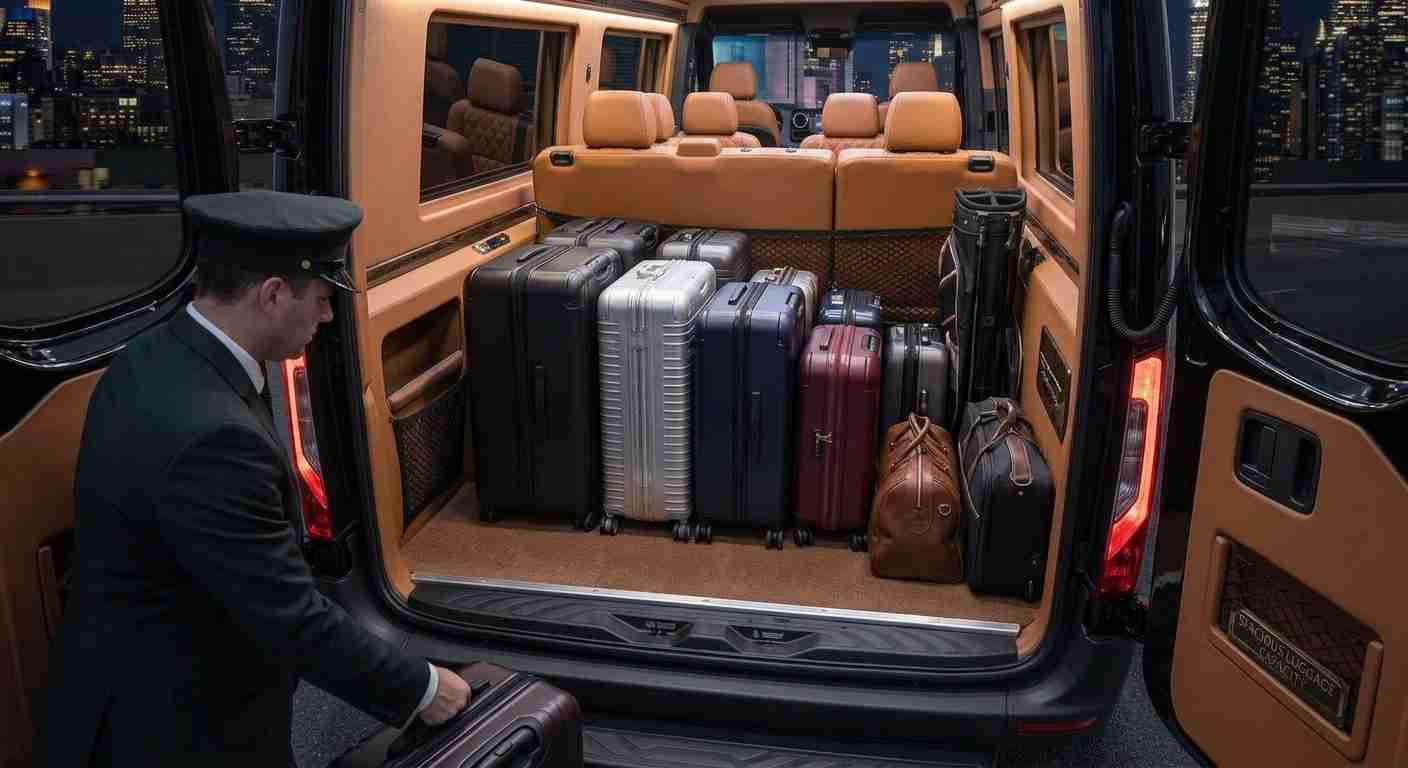
The finest jazz in New York unfolds late at night, often between 10:00 PM and 2:00 AM. Navigating between a 7:30 PM set in Harlem, an 11:00 PM set at the Village Vanguard, and a late-night midnight jam session in the East Village via public transit or scarce street taxis is exhausting and time-consuming. A dedicated private luxury chauffeured vehicle from Tour to NYC Tours transforms your evening into an effortless, sophisticated musical safari:
- Seamless Transfers Between Set Times: Step out of the Village Vanguard the moment the final chord resonates, find your chauffeur staged smoothly curbside, and arrive at the Blue Note or Smalls with zero wasted transit time.
- Safe Late-Night Transportation: Indulge in vintage bourbon, craft cocktails, and wine pairings throughout the evening with the absolute security of knowing your vetted, professional chauffeur is your designated driver, escorting your party safely back to your hotel portico.
- Curated Music on Wheels: Enjoy high-fidelity sound inside your luxury SUV or executive van, listening to rare Blue Note and Prestige jazz recordings between club stops to set the mood for your next venue.
The Speakeasy Jazz Renaissance: Cellar Dog, Zinc Bar & Django
Beyond the historic concert temples, Manhattan’s subterranean listening rooms and speakeasies keep the spontaneous, bohemian spirit of live jazz vibrant and accessible:
- The Django (The Roxy Hotel, Tribeca): Descend into an intimate, vaulted brick cellar inspired by the legendary jazz boîtes of 1930s Paris. With custom acoustic treatments, vintage French lighting, and craft cocktails, The Django showcases fiery gypsy jazz guitar ensembles, classic swing quartets, and modern hard-bop innovators until the early morning hours.
- Zinc Bar (82 West 3rd Street, Greenwich Village): Operating on historic Greenwich Village ground, Zinc Bar features a vintage zinc bar counter, heavy velvet curtains, and an eclectic musical program spanning classic bebop, Brazilian bossa nova, Afro-Cuban jazz, and flamenco guitar virtuosos.
- Cellar Dog (formerly Fat Cat – Christopher Street): A delightfully unpretentious subterranean playground where serious young jazz students from Juilliard and Manhattan School of Music jam beside billiards tables, ping-pong, and shuffleboard, creating a lively, cross-generational musical salon.
The Jazz Record Center & Vinyl Pilgrimages
For music collectors, no journey to New York is complete without hunting for authenticated vintage jazz vinyl:
- The Jazz Record Center (236 West 26th Street, Room 804): Located on the eighth floor of an unassuming commercial building in Chelsea, this is the only store in the world devoted exclusively to jazz music and literature. Operated by jazz scholar Fred Cohen for over four decades, the shop is a treasure trove of rare original-pressing Blue Note, Prestige, and Riverside 33-RPM LP records, out-of-print jazz biographies, historic concert posters, and authenticated autographed memorabilia.
- Generation Records & Village Vanguard Merchandise: Pick up collectible jazz recordings on St. Mark’s Place or stop into the Village Vanguard to purchase authenticated historical concert posters and vinyl recorded live inside the sacred basement.
Frequently Asked Questions on NYC Jazz Clubs
How far in advance should we book tickets for the Village Vanguard?
Tickets for the Village Vanguard go on sale online and regularly sell out one to three weeks in advance, particularly for Friday, Saturday, and Monday big band sets. We strongly recommend reserving your tickets well before your arrival in New York.
Are jazz clubs suitable for young music students or teenagers?
Yes. Venues like Dizzy’s Club at Lincoln Center, Birdland, and early sets at the Village Vanguard welcome music students of all ages. However, late-night basement clubs like Smalls or Blue Note may enforce 21+ age restrictions after midnight due to liquor licensing regulations.
What is the dress code for New York jazz clubs?
Dress codes are generally ‘smart casual’. While suits and cocktail attire are common at Dizzy’s Club and Lincoln Center, dark jeans, tailored jackets, and stylish casual wear are welcomed at the Village Vanguard and downtown clubs.
Conclusion: Feel the Soul of New York’s Musical Heritage
To experience live jazz in New York is to commune with the genius, pain, triumph, and boundless improvisation that defines the American spirit. Immerse yourself in the world’s greatest live music scene with the supreme elegance, comfort, and safety of Tour to NYC.
Book your custom private jazz tour at Tour to NYC Tours or consult with our nightlife concierges at Tour to NYC Contact today.
Birdland Jazz Club: The Jazz Corner of the World
Originally opened in 1949 at 1678 Broadway and named in honor of alto saxophonist Charlie ‘Bird’ Parker, Birdland was christened ‘The Jazz Corner of the World’ by Parker himself. The venue attracted celebrities like Marilyn Monroe, Frank Sinatra, and Judy Garland. Today operating in an elegant theater-district listening salon on West 44th Street, Birdland hosts the celebrated Birdland Big Band, Latin jazz legends like Arturo O’Farrill, and intimate vocal jazz artists accompanied by world-class dining and craft cocktails.